Ground improvement encompasses a suite of geotechnical engineering techniques designed to enhance the physical and mechanical properties of soil and rock masses, enabling safe and economical construction where natural ground conditions are inadequate. In Barrie, Ontario, this discipline is critical due to the region's complex glacial history, which left behind highly variable deposits ranging from dense till to thick sequences of soft, compressible clay and loose, water-bearing sands. Without targeted ground treatment, structures built on these soils face risks of excessive settlement, bearing capacity failure, and instability, making ground improvement not just an option but a fundamental requirement for long-term performance and compliance with building codes.
The local geology of Barrie is dominated by the legacy of the Laurentide Ice Sheet and post-glacial Lake Algonquin. Much of the city, particularly areas near Kempenfelt Bay and the city center, is underlain by deep glaciomarine and glaciolacustrine clays that can be normally consolidated or lightly overconsolidated, exhibiting high compressibility and low shear strength. In other zones, particularly along the Oro Moraine and former shoreline terraces, loose alluvial sands and silts are prevalent, posing risks of liquefaction and dynamic settlement under seismic loading. This geological patchwork demands a rigorous, site-specific approach where techniques like stone column design and vibrocompaction design are not generic solutions but carefully engineered responses to distinct subsurface challenges.
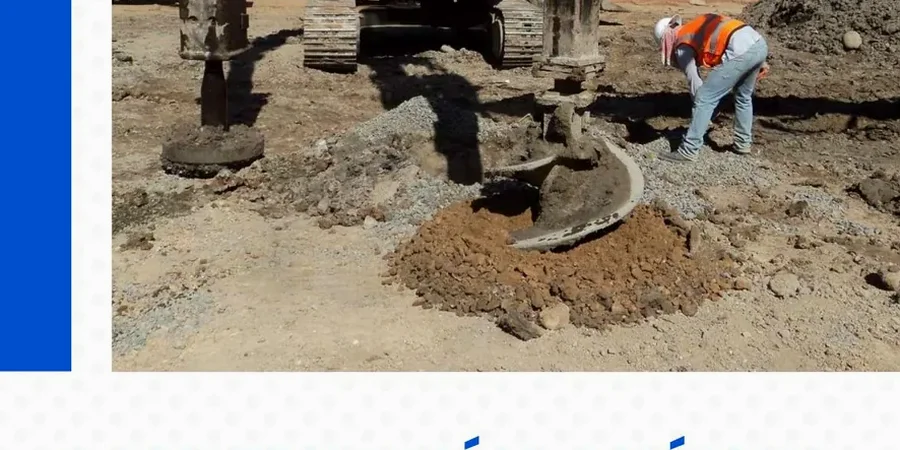
Regulatory compliance in Barrie is governed by the Ontario Building Code (OBC), which references the National Building Code of Canada (NBC) and CSA standards for geotechnical design. The OBC mandates that foundation design account for ultimate limit states (ULS) and serviceability limit states (SLS), directly addressing bearing capacity, total and differential settlement, and slope stability. For ground improvement, this translates into a requirement for rigorous design documentation, often involving in-situ testing programs such as Cone Penetration Tests (CPTu) and Standard Penetration Tests (SPT) to characterize pre- and post-treatment conditions. Professional engineers in Ontario must also adhere to the Professional Engineers Act and guidelines from the Association of Professional Geoscientists of Ontario (APGO), ensuring that all designs, from stone column design to deep dynamic compaction, are sealed and founded on verified geotechnical models.
The types of projects in Barrie that routinely require ground improvement are diverse and expanding with the city's growth. Low to mid-rise commercial buildings on the compressible clays of the city core often rely on rigid inclusions or stone columns to control settlement and provide adequate bearing capacity for conventional spread footings. Infrastructure corridors, including road embankments and bridge approaches along Highway 400 and arterial roads like Mapleview Drive, demand solutions such as prefabricated vertical drains (PVDs) with surcharging or lightweight fills to manage post-construction settlements. Industrial facilities with heavy floor loads and vibration-sensitive equipment in Barrie's annexed lands frequently utilize vibrocompaction design to densify loose granular fills and mitigate liquefaction potential. Residential subdivisions on marginal lands also benefit from ground improvement, enabling cost-effective development without deep excavation and replacement.
Available services
Frequently asked questions
What is ground improvement and when is it required in Barrie?
Ground improvement is the modification of soil properties to increase strength, reduce compressibility, or mitigate liquefaction. In Barrie, it is typically required when construction encounters the region's deep soft glaciolacustrine clays or loose saturated sands, where untreated ground would lead to excessive settlement, bearing capacity failure, or instability under the design loads specified by the Ontario Building Code.
How do I know which ground improvement method is right for my Barrie project?
Method selection depends entirely on subsurface conditions, structural loading, and performance criteria. A comprehensive geotechnical investigation using CPTu and SPT data is essential to model soil behavior. For soft clays, stone columns or rigid inclusions may be optimal, while loose granular soils often respond best to vibrocompaction. The final choice must satisfy Ontario's limit state design requirements for both ULS and SLS.
What are the regulatory requirements for ground improvement in Ontario?
All ground improvement designs must comply with the Ontario Building Code, which references the National Building Code and CSA standards. A licensed professional engineer must seal the design, which must be based on a site-specific geotechnical investigation. Post-treatment verification testing, such as load tests or in-situ density measurements, is mandatory to confirm that the design criteria have been met.
How long does a typical ground improvement project take in Barrie?
Project duration varies significantly with the method and site scale. Vibrocompaction of a moderately sized commercial lot can often be completed in one to two weeks, whereas a stone column installation with surcharging for a multi-story building on thick clay might extend over several months. The timeline is heavily influenced by the required depth of treatment and the soil's response to the chosen technique.