Road geotechnics in Barrie, Ontario, encompasses the application of soil mechanics, rock mechanics, and geology to the planning, design, construction, and maintenance of transportation infrastructure. Given Barrie's rapid growth as a key hub in Simcoe County and its position along major corridors like Highway 400, the stability and longevity of roadways are paramount. This discipline addresses everything from subgrade evaluation and slope stability to pavement foundation design, ensuring that roads can withstand not only traffic loads but also the region's challenging environmental conditions. Proper geotechnical input is critical to prevent premature failures such as rutting, cracking, and frost heave, which are common in this climate.
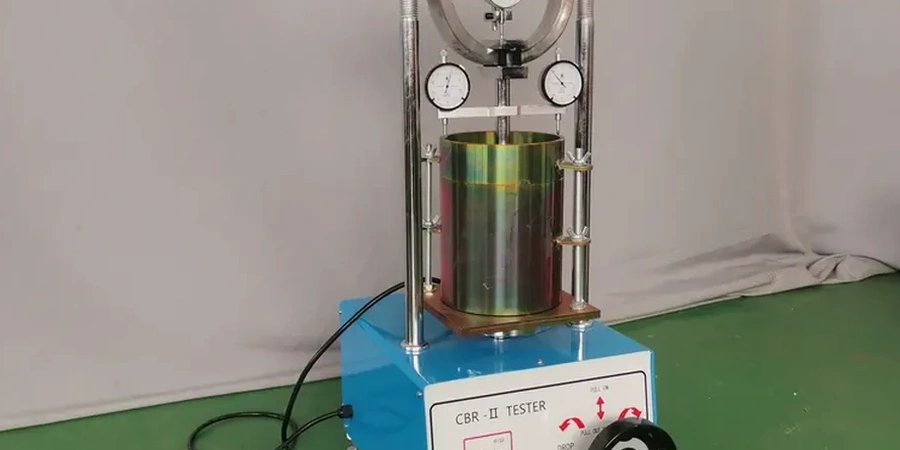
The local geology of Barrie presents a unique set of conditions that road engineers must navigate. The area is underlain by a complex stratigraphy of glacial deposits, including dense till, glaciolacustrine silts and clays from the former Lake Algonquin, and outwash sands and gravels. These soils can vary dramatically over short distances, with pockets of highly compressible organic soils in low-lying areas near Kempenfelt Bay. The water table is often high, and the presence of sensitive, varved clays in some locations requires careful investigation to avoid long-term settlement and bearing capacity failures. A thorough CBR study for road design is therefore indispensable for characterizing the strength of these variable subgrade materials.
Regulatory compliance in Ontario is governed by a hierarchy of standards, with the Ministry of Transportation of Ontario (MTO) providing the primary framework through documents like the MTO Laboratory Testing Manual and the Ontario Provincial Standards for Roads and Public Works (OPS). Additionally, the city of Barrie has its own engineering standards that align with provincial requirements. The Canadian Foundation Engineering Manual (CFEM) and relevant CSA standards guide geotechnical investigations, while pavement design often adheres to the AASHTO 1993 method, adapted for Canadian conditions, alongside the newer Mechanistic-Empirical Pavement Design Guide (MEPDG). These norms dictate rigorous testing protocols, minimum compaction requirements, and specific material gradations to ensure performance under freeze-thaw cycles.
Projects in Barrie that demand comprehensive road geotechnics range from new suburban subdivisions and arterial road widenings to the rehabilitation of aging infrastructure in the city center. The design of a durable flexible pavement system, for instance, relies heavily on a geotechnically sound subgrade and granular base, which must be engineered to drain effectively and resist deformation. In contrast, a rigid pavement design for a high-load intersection or a bus rapid transit lane requires a precise assessment of the subgrade modulus and joint load transfer mechanisms. Other critical applications include embankment design for bridge approaches, slope stabilization along the city's many ravines, and the geotechnical assessment of culvert and utility trench backfills to prevent differential settlement.
Frequently asked questions
What are the main geotechnical challenges for road construction in Barrie?
The primary challenges include highly variable glacial soils, from dense till to compressible glaciolacustrine clays, and a high water table near Kempenfelt Bay. Severe freeze-thaw cycles lead to frost heave in frost-susceptible silts, while pockets of organic soils can cause long-term settlement. Managing slope stability along ravines and ensuring adequate drainage to prevent subgrade saturation are also critical concerns for long-term road performance.
What Ontario standards govern geotechnical investigations for road projects?
Geotechnical investigations for roads in Barrie must comply with the Ministry of Transportation of Ontario (MTO) Laboratory Testing Manual, Ontario Provincial Standards for Roads and Public Works (OPS), and the Canadian Foundation Engineering Manual (CFEM). The city of Barrie also has its own supplemental standards. Pavement design typically follows the AASHTO 1993 guide as modified for Ontario or the newer MEPDG methodology.
How does a CBR study influence the pavement design process?
A California Bearing Ratio (CBR) study quantifies the shear strength of the subgrade soil, which is a direct input for determining the required thickness of granular base and pavement layers. A low CBR value, common in Barrie's wetter clay zones, necessitates a thicker structural section to distribute traffic loads and prevent rutting. It is a fundamental empirical test that underpins the structural design of flexible pavements.
When is a rigid pavement design preferred over a flexible one in road geotechnics?
Rigid pavement, or concrete, is typically chosen for high-load areas such as major intersections, industrial access roads, or bus rapid transit corridors due to its superior resistance to deformation under sustained heavy loads. Geotechnically, it is preferred when a strong, stable subgrade exists, as it distributes loads over a wide area. It also offers better long-term performance against shoving and rutting from heavy vehicles in hot weather.