In Barrie, the term 'slopes' encompasses far more than just inclined ground—it refers to a critical geotechnical discipline focused on analyzing, designing, and stabilizing natural and engineered earth surfaces to prevent failure and ensure long-term safety. Given the city's rolling topography, with numerous residential and commercial developments perched along the Kempenfelt Bay shoreline and the Niagara Escarpment's peripheral influence, slope stability is not merely a design consideration but a fundamental necessity. A comprehensive slope stability analysis forms the backbone of any project involving cuts, fills, or natural grades, evaluating factors like soil shear strength, groundwater conditions, and surcharge loads to quantify the risk of landslides or erosion. This category integrates geology, hydrology, and structural engineering to deliver solutions that protect property, infrastructure, and lives from the often-subtle precursors to slope movement that can escalate into costly failures.
Barrie's unique geological setting amplifies the importance of specialized slope engineering. The region is underlain by a complex stratigraphy of glacial till, glaciolacustrine silts and clays, and sandy deposits from the former Lake Algonquin, creating highly variable conditions over short distances. These fine-grained soils, particularly the sensitive Leda-type clays found in parts of Simcoe County, can lose significant strength when disturbed or saturated, making them prone to retrogressive landslides. Furthermore, the fluctuating water levels of Kempenfelt Bay and the numerous creeks feeding it continuously alter pore-water pressures within adjacent slopes, a dynamic that demands rigorous monitoring and adaptive design. The presence of permeable sand lenses within less permeable clay matrices often leads to perched water tables and seepage faces, which are common triggers for slope instability in the area and require targeted mitigation strategies.
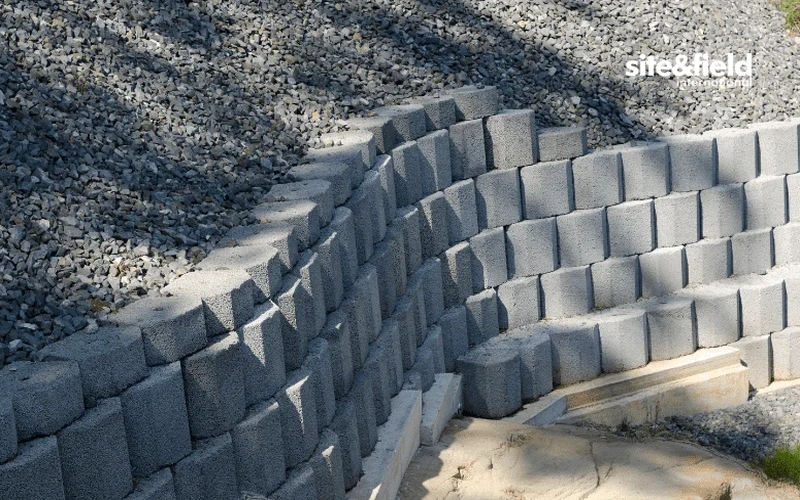
Navigating the regulatory landscape is an integral part of any slope-related project in Barrie. All work must comply with the Ontario Building Code (OBC), which references the National Building Code of Canada and mandates geotechnical investigations for structures founded on or near slopes. Crucially, the Lake Simcoe Region Conservation Authority (LSRCA) enforces Ontario Regulation 179/06 under the Conservation Authorities Act, strictly regulating development within hazardous lands, including unstable slopes and erosion-prone areas. Professionals must also adhere to the Professional Engineers Act, ensuring that all retaining wall design and slope stabilization measures are stamped by a licensed Professional Engineer (P.Eng.) in Ontario. These regulations collectively require detailed geotechnical reports, slope stability analyses with appropriate factors of safety, and long-term monitoring plans as prerequisites for obtaining site plan approval or building permits.
The types of projects requiring this expertise in Barrie are diverse and growing alongside the city's expansion. Residential developments on the city's south and east ends frequently involve cutting into hillsides to create building pads, necessitating both temporary shoring and permanent slope reinforcement. Infrastructure corridors, such as road widenings along Essa Road or new transit routes, often require steepened embankments that rely on advanced active/passive anchor design to maintain stability within limited right-of-ways. Waterfront properties and municipal parks along the bay demand erosion control and slope armoring to combat wave action and ice scour. Even smaller-scale projects like custom home builds on infill lots with significant grade changes trigger the need for a thorough slope assessment to satisfy both municipal and conservation authority requirements, ensuring that development does not increase the risk to adjacent properties or natural heritage features.
Frequently asked questions
What are the early warning signs of slope instability that property owners in Barrie should watch for?
Key indicators include new or widening tension cracks in the ground, especially parallel to a slope crest; tilting trees or fence posts; sudden changes in drainage patterns or soggy ground; sticking doors or windows in a home; and small, localized slumps or soil movement at the toe of a slope. Any of these signs warrants an immediate professional geotechnical assessment to evaluate the risk and determine necessary mitigation measures.
How does the local conservation authority influence slope-related projects in Barrie?
The Lake Simcoe Region Conservation Authority (LSRCA) regulates development in and near hazardous lands under Ontario Regulation 179/06. They require geotechnical studies demonstrating that a slope is stable or will be adequately stabilized before issuing permits. Their review ensures that projects do not increase erosion or negatively impact water quality and natural heritage systems within the Lake Simcoe watershed.
What is the typical process for a slope stability analysis on a development site?
The process begins with a subsurface investigation involving boreholes and test pits to define soil and groundwater conditions. Laboratory testing determines soil strength parameters. A geotechnical engineer then builds a computer model to analyze the slope's factor of safety under various conditions, such as heavy rainfall or seismic loading. The final report recommends stabilization measures, setback distances, and drainage requirements to achieve compliance with the Ontario Building Code.
Can vegetation alone stabilize a problematic slope, or are engineered solutions always required?
While deep-rooted native vegetation is excellent for controlling surface erosion and removing shallow groundwater, it is rarely sufficient to stabilize a deep-seated landslide. Engineered solutions like retaining walls, soil nails, or tieback anchors are typically required to address the underlying failure mechanisms. A common best practice in Barrie combines structural reinforcement with a biotechnical approach, using plantings to protect against surface degradation.